Iris
The colored tissue that regulates pupil size and helps control how much light enters the eye.
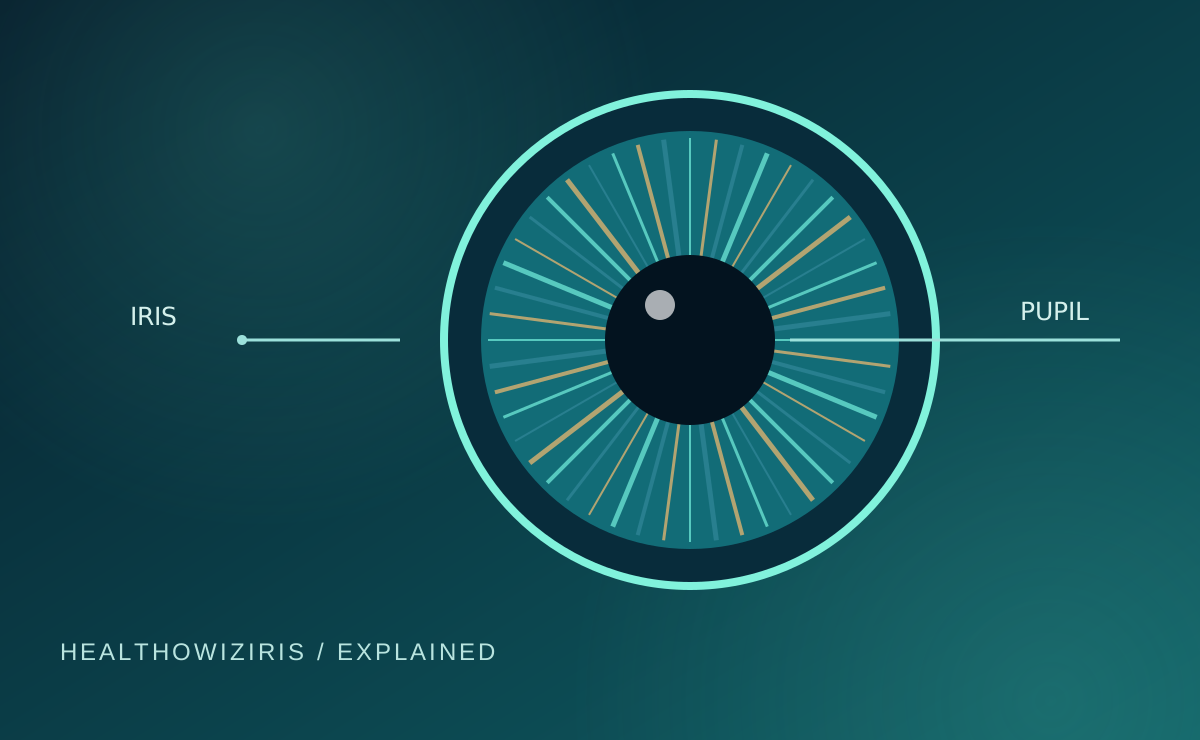
The iris is a thin ring of tissue behind the cornea. Its muscles change the pupil’s diameter: the pupil usually becomes smaller in bright light and larger in dim light.
The pupil is the dark opening in the center—not a separate solid structure. Light entering through the pupil travels toward the lens and retina.
Further reading: National Eye Institute — About the Eye ↗
The colored tissue that regulates pupil size and helps control how much light enters the eye.
The opening at the center of the iris through which light enters.
The clear outer surface at the front of the eye that helps bend light.
A clear structure that helps focus incoming light onto the retina.
Light-sensitive tissue at the back of the eye that sends visual signals onward.
The nerve pathway carrying visual information from the eye to the brain.
Iris color is influenced by pigmentation and the way light interacts with eye tissue. The iris can appear blue, green, brown, hazel or combinations of shades. Fibers, crypts and other visible features create a textured appearance.
Some eye appearances can change because of age, medications, trauma or health conditions. Changes that are new or concerning should be evaluated clinically. A photograph alone does not establish the cause.
Natural differences between irises should not be interpreted as a reliable map of diseases or personality traits. For that distinction, continue to our evidence and limitations guide.
Explore what studies say about claims made from iris photographs.
Read the evidence guide →